
What If Mom or Dad Refuses to Consider Senior Living?
Having tough conversations about senior living? A "no" from your parent doesn't end the talk—it just changes how you approach their support.

Loading…
The tour usually goes the same way.
Someone shows you the apartment — a one-bedroom with a small kitchenette, nicer than you expected. Then the dining room, set for lunch. The courtyard. The activities calendar taped to a bulletin board, color-coded by day. Maybe the salon, the fitness room, a cheerful person at the front desk who already seems to know everyone's name.
All of it is worth seeing.
None of it answers the question that actually brought you here.
What, specifically, is the "assisted" part of Assisted Living?
What is your parent actually going to be helped with, on an ordinary Tuesday, that isn't happening now?
It's a harder question than it sounds, partly because the tour is designed to show you a lifestyle, and partly because "assistance" is a strangely abstract word until you picture it happening to someone in particular.

Families often think about independence like a switch — Mom is either independent or she isn't.
Real life doesn't work that way.
Someone can know exactly which sweater she wants to wear and still need a hand getting her arm through the sleeve. Dad can understand his medications but have trouble remembering whether he took this morning's dose or is about to take it twice. Mom might walk perfectly well once she's on her feet and still need help getting there safely from a seated position.
Needing help with one thing doesn't erase everything a person can still do for themselves.
That distinction — between what someone needs help doing and what they can still fully do or decide for themselves — is really the whole idea behind good Assisted Living, and it's worth keeping in mind through everything that follows.
Bathing is a good place to start, because it's one families tend to picture most anxiously.
In practice, Mom may still decide when she showers, which shampoo she uses and what she puts on afterward. What she may need is someone nearby to make getting in and out of the shower safe, rather than something she has to attempt alone and hope for the best.
Dressing works similarly.
Dad picks the blue shirt. Someone else helps with the buttons his hands don't quite manage anymore.
Mobility assistance doesn't necessarily mean someone needs help everywhere they go. It may mean assistance with the specific moments that carry more risk — getting out of bed, covering a longer hallway, or making it to the bathroom safely at 3 a.m. Someone can be steady on their feet for most of the day and still need help at particular moments.
Medications can present a different challenge. Someone may understand what a prescription is for but have trouble remembering whether Tuesday morning's dose was actually taken. A new prescription or changing medication schedule can make things more complicated still. Depending on the community and the resident's needs, medication assistance may become an important part of the support being provided.
Meals matter in a similar way.
Having food in the house isn't the same as eating well. Shopping, cooking and cleaning up three times a day is real work, and it's often one of the things that quietly becomes harder over time. Assisted Living can take that work off someone's plate while still leaving choices about what actually goes on it.
Housekeeping and laundry are easy to wave off as conveniences — until keeping a household running starts consuming energy someone would rather spend elsewhere, on people or hobbies or simply resting.
Transportation deserves its own mention, because giving up driving can shrink someone's world dramatically and fast. Depending on what a community offers, transportation can make appointments, errands and activities accessible without depending entirely on family members for every ride.
Social connection is worth naming honestly.
Living near other people doesn't automatically create friendship, and Assisted Living isn't a cure for loneliness. Some residents find real companionship there and some don't, the same as anywhere else.
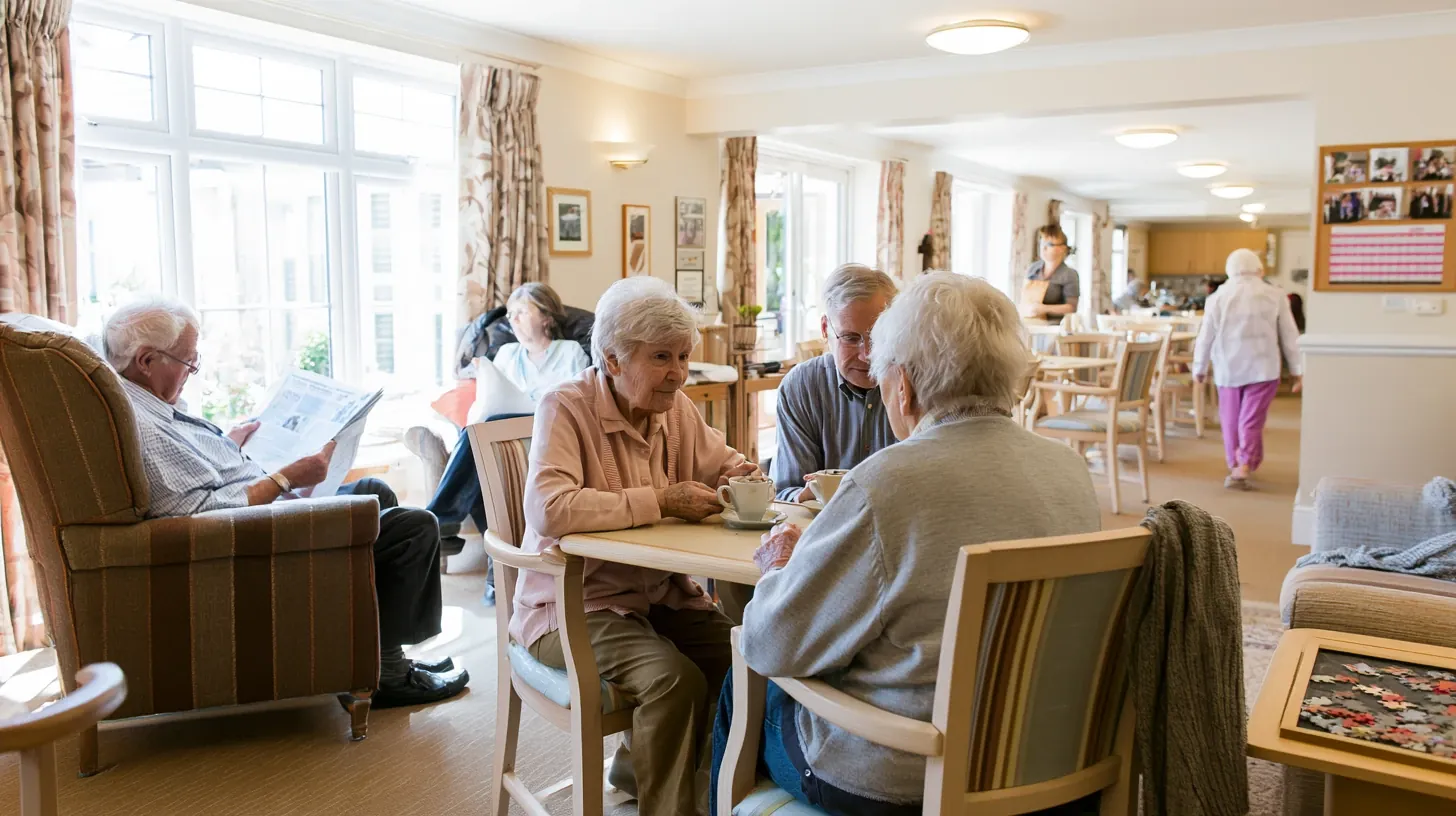
What a community can offer is more ordinary opportunity for connection: a dining room table with familiar faces, a conversation in the hallway, an activity that doesn't require arranging transportation just to attend.
And then there's something harder to name specifically, which is simply knowing help is nearby.
Living alone, a fall or another problem may go unnoticed for some time. Having someone nearby who can respond when help is needed can be its own form of assistance, even on all the days when nothing goes wrong.
None of this is meant as an inventory to check off.
It's meant to show how a handful of small supports, added in the right places, can change what an ordinary day actually feels like.
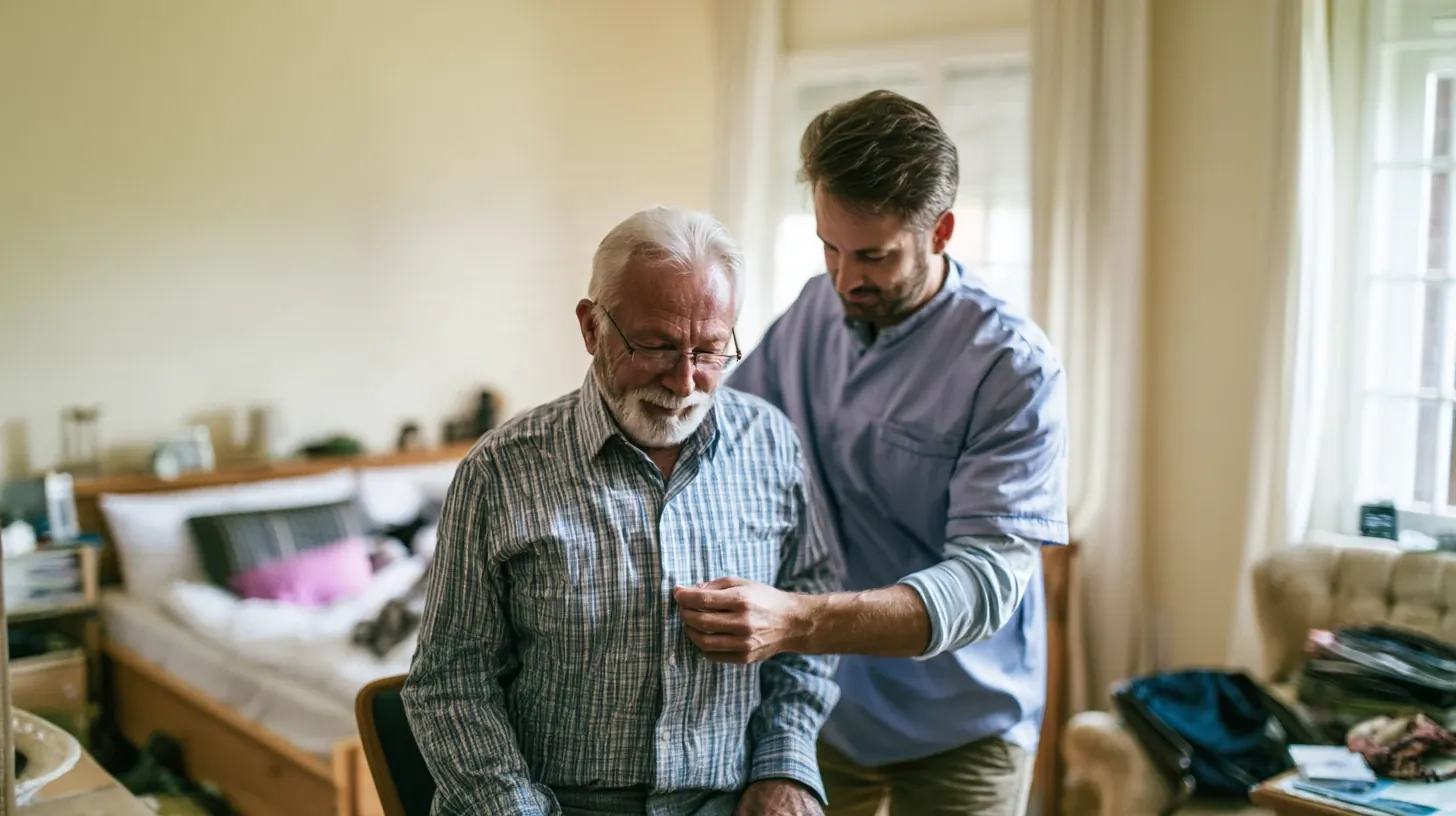
Professionals sometimes divide these needs into two broad categories.
There are the basic personal tasks of daily life — things like bathing, dressing, eating, using the bathroom and moving around.
Then there's the more complicated work of running a life — medications, meals, transportation, shopping, finances and maintaining a household.
You may hear these referred to as Activities of Daily Living and Instrumental Activities of Daily Living, or ADLs and IADLs.
The terminology isn't particularly important for families to memorize.
What's useful is the idea underneath it: someone may need help with certain parts of daily life while remaining perfectly capable in many others. And those needs often change gradually rather than all at once.
More help isn't automatically better.
Too little assistance can leave daily life exhausting or genuinely unsafe. But doing things for someone that they could still safely do themselves can quietly chip away at exactly the independence everyone's trying to protect.
That's why a better tour question than:
"How much care do you provide?"
might be:
"How do you determine what my parent actually needs help with — and what they can continue doing for themselves?"
A community that has a thoughtful, specific answer to that question is telling you something important about how it operates day to day.
It's tempting to treat "Assisted Living" as a fixed package that's the same everywhere.
It isn't.
What's included in the base rate, what costs extra, how care needs are assessed and reassessed, and how much a community can accommodate as someone's needs grow all vary — by state, by license and by the individual community.
Some communities can support residents through fairly significant increases in care. Others have narrower limits and a clearer point where they'll say they can no longer meet someone's needs.
It's worth asking plainly:
What's included at the current rate, and what isn't?
How often is care reassessed, and by whom?
What happens if Mom needs more help in six months than she does today?
At what point might the community no longer be able to meet her needs?
Those answers matter far more than whether a community can simply say yes to the words "Assisted Living."

Assisted Living isn't the same as Independent Living, which generally provides little or no hands-on personal care.
It's not necessarily Memory Care, Skilled Nursing or round-the-clock one-on-one care either.
Someone with substantial medical or cognitive needs may require services beyond what a particular Assisted Living community is licensed, staffed or equipped to provide. Those capabilities vary enough by state and community that it's always worth asking directly rather than assuming.
The point isn't to draw a rigid line.
It's simply to understand that "Assisted Living" doesn't mean every kind of care happens under one roof.
Come back, for a moment, to that tour.
The apartment matters.
The food matters.
The courtyard and the activities calendar matter too.
But try picturing an ordinary Tuesday.
Mom wakes up. Who helps her out of bed, if she needs it? Who's there when she showers? How does she get to breakfast, and what happens with her morning medication?
If she'd rather skip the afternoon activity and just sit by the window, is that hers to choose?
And if she needs meaningfully more help a year from now, what actually happens next?
That's the real question underneath the tour — not simply whether a service exists on paper, but how it shows up in an actual resident's day.
It's easy to hear "Assisted Living" and focus on what's being lost.
But assistance, done well, can be what allows someone to keep doing the things they still can — showering safely instead of avoiding it, eating well instead of skipping meals, getting where they need to go instead of becoming increasingly isolated at home.
The goal isn't maximum independence at all costs.
And it isn't maximum assistance either.
It's the right help, in the right places.
Enough assistance to make the things that have become difficult a little easier or safer, while preserving as much choice and capability as possible everywhere else.
Because the best measure of assistance isn't how much is being done for someone.
It's how much of their ordinary life they're still able to call their own.

Jeff Hix writes about senior living with one goal: helping families, providers, and healthcare professionals make better decisions through transparency, education, and practical guidance.
After helping his father build, launch, and market an Assisted Living and Memory Care community in Southern California, Jeff developed a unique perspective on both the emotional journey families experience and the day-to-day realities senior living providers face.
Today, as Co-Founder and Chief Revenue Officer of Map Of Care, he writes about the ideas, trends, and practical insights shaping the future of senior living.
Having tough conversations about senior living? A "no" from your parent doesn't end the talk—it just changes how you approach their support.
Tours blurring together? Skip the sales pitch and focus on what matters most: finding a senior living community that fits your parent’s life.