How to Choose Senior Living: 7 Areas to Look Past the Sales Pitch
Tours blurring together? Skip the sales pitch and focus on what matters most: finding a senior living community that fits your parent’s life.

Loading…
Start with the problem, not the building.
Most families begin the search for senior living the same way. They look up communities online, request information, schedule tours, and try to make sense of what they find.
It's a reasonable approach.
And it often leads to confusion.

The confusion isn't the family's fault. Senior living isn't one thing—it's a collection of very different environments designed to solve very different problems. Independent Living solves a different problem than Memory Care. A Skilled Nursing Facility solves a different problem than a residential care home. When families try to evaluate all of these options simultaneously, as if they were choosing between different versions of the same product, the categories blur and the decision feels impossible.
The clearer starting point is the problem itself.
Every level of senior living exists because it addresses a specific set of needs. Before asking, "Which community should we choose?" the more productive question is:
"What problem are we actually trying to solve right now?"
Those two questions lead to very different searches—and often very different outcomes.
Many families quietly hope they'll never need senior living at all.
For many people, the answer truly does begin at home. And that's not avoidance—it's a legitimate choice that deserves to be made deliberately rather than by default.
Aging in place can work well when daily safety needs are manageable, when the home environment can be reasonably adapted, and when meaningful support exists through family, neighbors, or professional home care. In-home care ranges from companionship and housekeeping to help with bathing, medication reminders, and mobility. Technology has extended what's possible, while adult day programs can provide structure and socialization without requiring a permanent move.
The problems home addresses well are straightforward: a parent who is strongly motivated to stay, manageable safety needs, and a family with realistic capacity to provide support.
The challenges begin when recurring falls, advancing dementia, increasing medical complexity, significant isolation, or caregiver burnout quietly become part of everyday life. Staying at home is not "doing nothing"—but it still requires an honest plan. The families who succeed have thought carefully about what could change and built support around it.
Independent Living is frequently misunderstood as a stepping stone toward more intensive care. For many older adults, it's simply the right destination.
These communities serve people who can manage their own daily activities and healthcare but want to live among peers without the burden of maintaining a home. Meals, housekeeping, transportation, activities, and built-in social opportunities become the primary benefits.
The problem Independent Living solves is often loneliness rather than healthcare.
If your parent remains largely independent but has gradually withdrawn after retirement, the loss of a spouse, or changing neighborhoods, Independent Living may solve the real problem more effectively than a more medical setting ever could.
What it doesn't solve is medication management, hands-on personal care, or ongoing safety supervision. If those needs already exist—or appear likely in the near future—it may not be the right starting point.
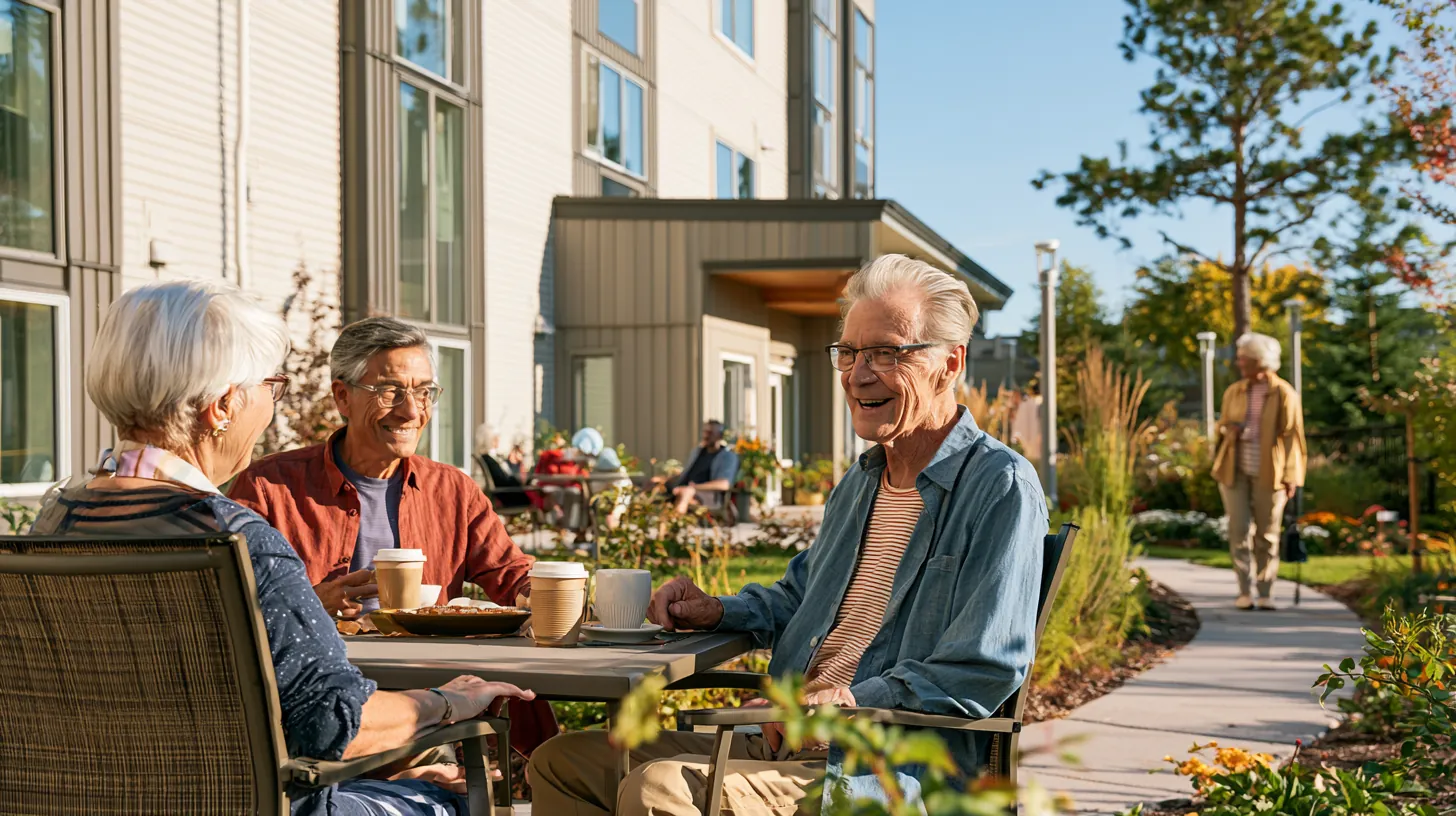
Assisted Living is where many families eventually find themselves, and it serves a remarkably wide range of needs.
These communities provide housing, meals, medication management, assistance with daily activities, and around-the-clock staff availability. The care is primarily personal rather than medical, helping residents remain as independent as possible while providing support where it's needed.
The problems Assisted Living addresses include recurring falls, medication mismanagement, caregiver burnout, mounting safety concerns, and the slow accumulation of daily challenges that become too much for one person—or one family—to manage alone.
One important lesson many families discover is that the words "Assisted Living" don't always mean the same thing. Staffing, caregiver training, clinical capabilities, and the complexity of residents a community can support vary significantly.
One of the most valuable questions you can ask is:
"How far can someone age in place here before another move becomes necessary?"
The answer often tells you far more than a brochure ever could.
In California—and many other states—there is another option that families often overlook entirely: residential care homes, sometimes called board and care homes.
These are small, home-like residences, often serving six to eight residents, licensed to provide many of the same personal care services as larger Assisted Living communities.
What makes them different isn't the care itself.
It's the environment.
Smaller homes often provide greater familiarity, closer caregiver relationships, quieter surroundings, and a more residential feel. For someone who would be overwhelmed by a large campus, that intimacy can make all the difference.
Board and care homes are frequently overlooked not because they're inferior, but because they're less visible. They don't have large marketing budgets or extensive advertising campaigns.
Yet for the right individual, they may provide exactly the kind of environment that feels most like home.
Memory Care is designed specifically for people living with Alzheimer's disease and other forms of dementia whose needs extend beyond what traditional Assisted Living can safely provide.
What distinguishes Memory Care isn't simply a secured environment. It's thoughtful design, specially trained staff, structured routines, and an environment intentionally created to reduce confusion while supporting dignity and independence.
Families sometimes hesitate because accepting Memory Care feels like acknowledging a difficult reality.
That feeling is understandable.
But remaining in an environment that cannot safely support someone's cognitive needs rarely protects what families are hoping to preserve.
Choosing Memory Care isn't giving up.
It's choosing care specifically designed for the challenges dementia creates.
Skilled Nursing Facilities—sometimes still called Nursing Homes—serve people whose primary needs are medical.
Licensed nursing care, rehabilitation, wound management, complex medications, and recovery following surgery or hospitalization define these communities.
Many Skilled Nursing stays are temporary, helping someone recover before returning home or transitioning to a lower level of care.
Others become long-term because medical needs simply exceed what any other setting can safely provide.
Families often encounter Skilled Nursing unexpectedly after a hospitalization.
Understanding what Skilled Nursing is before that moment arrives makes those conversations far less overwhelming.

Hospice differs from every other option discussed here because it isn't a place.
It's a philosophy of care.
Hospice focuses on comfort, symptom management, dignity, and quality of life for people approaching the end of life. It can be provided at home, in Assisted Living, in Skilled Nursing, or in dedicated hospice settings.
The important change isn't necessarily location.
It's purpose.
The focus shifts from curing illness to helping someone live as comfortably and meaningfully as possible with the time that remains.
Families also encounter Continuing Care Retirement Communities (CCRCs), sometimes called Life Plan Communities.
These are not another level of care.
They're a different model of care delivery.
CCRCs typically combine Independent Living, Assisted Living, Memory Care, and Skilled Nursing on a single campus, allowing residents to transition between levels as needs evolve.
For some families, that continuity offers tremendous peace of mind.
Others prefer choosing a new community when circumstances change.
Neither approach is universally better.
Like many senior living decisions, it's a matter of priorities, preferences, and long-term planning.
Perhaps the most important idea in this entire discussion is this:
The best decisions aren't based only on today.
They're made with tomorrow in mind.
Care needs evolve.
Families evolve.
Life changes.
The right level of care today may not be the right level two years from now.
The most prepared families don't simply ask:
"Where does Mom fit today?"
They also ask:
"Where does this journey appear to be heading?"
That doesn't mean predicting every future possibility.
It simply means recognizing that good planning includes today's needs while remaining thoughtful about tomorrow's.
Communities that can speak honestly about how needs change—and how they help residents navigate those changes—often become trusted partners rather than simply providers.
Understanding the landscape is the first step.
Applying it to your own family's situation is the next.
If you're still determining which type of care best fits your loved one's current needs, the Map of Care Senior Living Tool provides a structured way to organize those conversations before you begin scheduling tours.
It won't make the decision for you.
No tool can.
But it can help you identify the most appropriate place to begin—giving you greater clarity, more productive conversations, and greater confidence as you move forward.
The goal isn't to understand every detail of senior living.
It's simply to understand where your loved one is today, where they may be heading tomorrow, and to begin the journey with confidence.

Jeff Hix writes about senior living with one goal: helping families, providers, and healthcare professionals make better decisions through transparency, education, and practical guidance.
After helping his father build, launch, and market an Assisted Living and Memory Care community in Southern California, Jeff developed a unique perspective on both the emotional journey families experience and the day-to-day realities senior living providers face.
Today, as Co-Founder and Chief Revenue Officer of Map Of Care, he writes about the ideas, trends, and practical insights shaping the future of senior living.
Tours blurring together? Skip the sales pitch and focus on what matters most: finding a senior living community that fits your parent’s life.

Advertised senior living rates can be misleading. Here is how to break down base rates, care levels, and hidden fees to find the real monthly cost.