
How Much Does Assisted Living Really Cost?
Advertised senior living rates can be misleading. Here is how to break down base rates, care levels, and hidden fees to find the real monthly cost.

Loading…
Everybody's noticed something. Dad's driving has gotten a little more white-knuckle, for him and for whoever's in the passenger seat. Mom's lost some weight nobody can quite account for. The house isn't kept up the way it used to be — nothing dramatic, but little things aren't getting done the way they used to. Someone fell, and it wasn't serious, but it wasn't nothing either. The mail's piling up. You've started making more trips over for groceries, appointments, prescriptions, and it's somehow become a regular part of your week instead of an occasional favor.
No single thing on that list means senior living. But everyone in the family can feel that something is shifting, and nobody wants to be the one who says it out loud:
Do we need to start thinking about senior living?
It feels like a loaded question, because it feels like it demands an answer. Say it, and suddenly you're the one who set something in motion that can't be taken back.
But that's not actually what's happening.
Asking the question isn't deciding the answer.
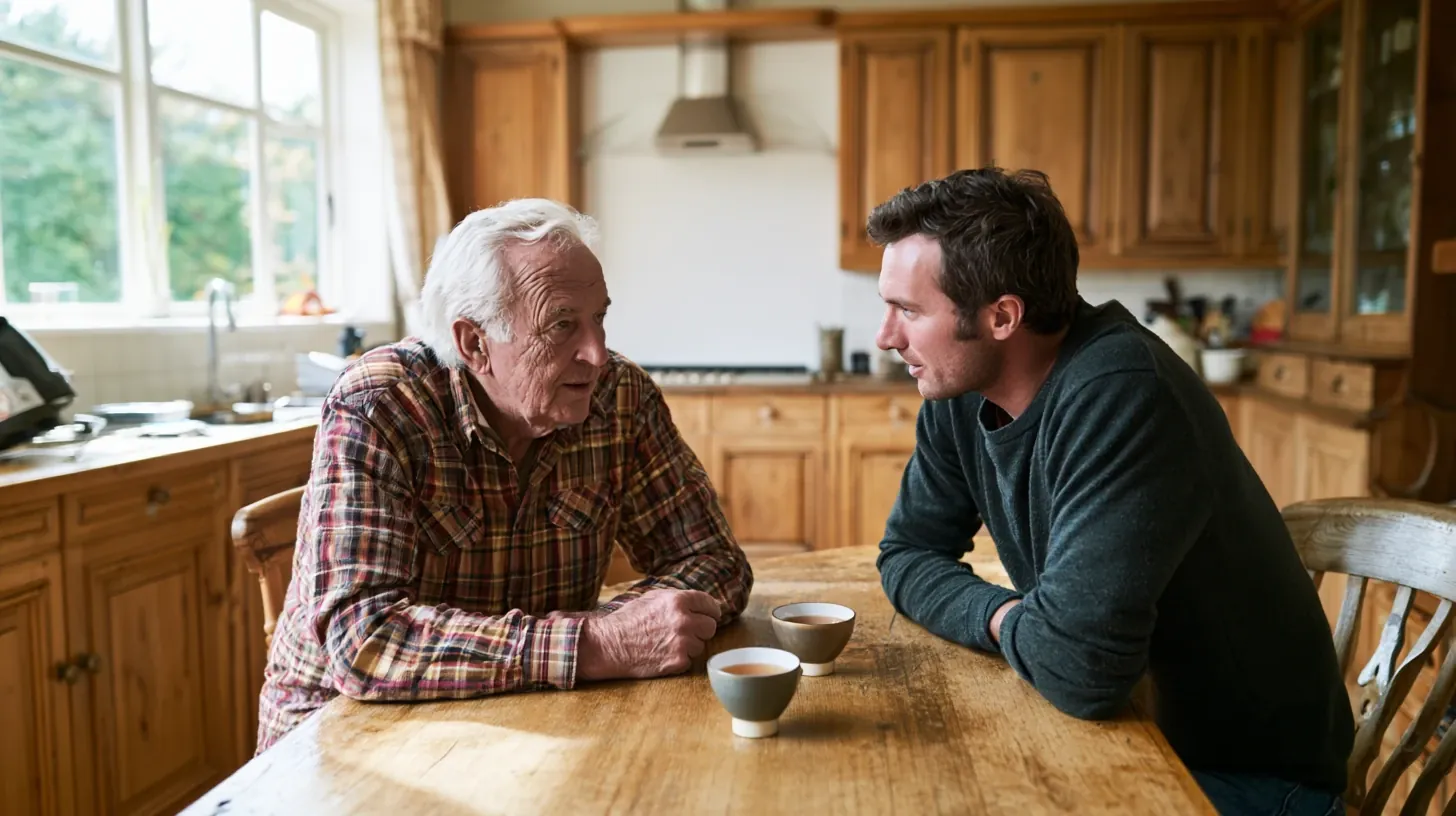
Starting a conversation about what comes next is not the same as deciding someone needs to move. Those are two different things, and mixing them up is a big part of why families wait so long to talk at all.
Skip the mental checklist of "10 signs it's time for assisted living." Real life rarely hands you a clean signal.
One forgotten bill doesn't decide it. One fall doesn't decide it. One lonely weekend, one burned dinner, one missed pill — none of these settle anything on their own.
What's actually worth paying attention to is the trajectory, not the incident.
What's becoming harder than it used to be? What's happening more often than it did six months ago? What now requires help that didn't used to?
Look at the whole picture, not just one corner of it: meals and nutrition, medications, personal care, mobility and falls, driving, keeping up the house, bills and finances, how much company someone's actually getting, memory and thinking, and the general capacity to manage a day without things slipping through the cracks.
This isn't a diagnostic checklist to run through and score.
It's a way of noticing change instead of waiting for a crisis to announce it for you.
It's natural to focus on safety, because safety problems feel objective and undeniable — a fall happened, a stove got left on, that's data.
But limiting the conversation to danger means you don't start talking until something's already gone wrong.
Mom might be perfectly safe at home and also rarely see another human being for days at a time. Dad might still be able to cook, technically, but "cooking" has quietly become cereal and a rotation of three frozen dinners. The house might be entirely manageable — because his daughter spends every Saturday managing it. Driving might not have crossed into clearly unsafe territory yet, but it's become stressful enough that he's stopped going most places he used to go.
None of that shows up on an incident report.
All of it is relevant.
Quality of life belongs in this conversation right alongside safety.
Here's something families often miss because it's hiding in plain sight:
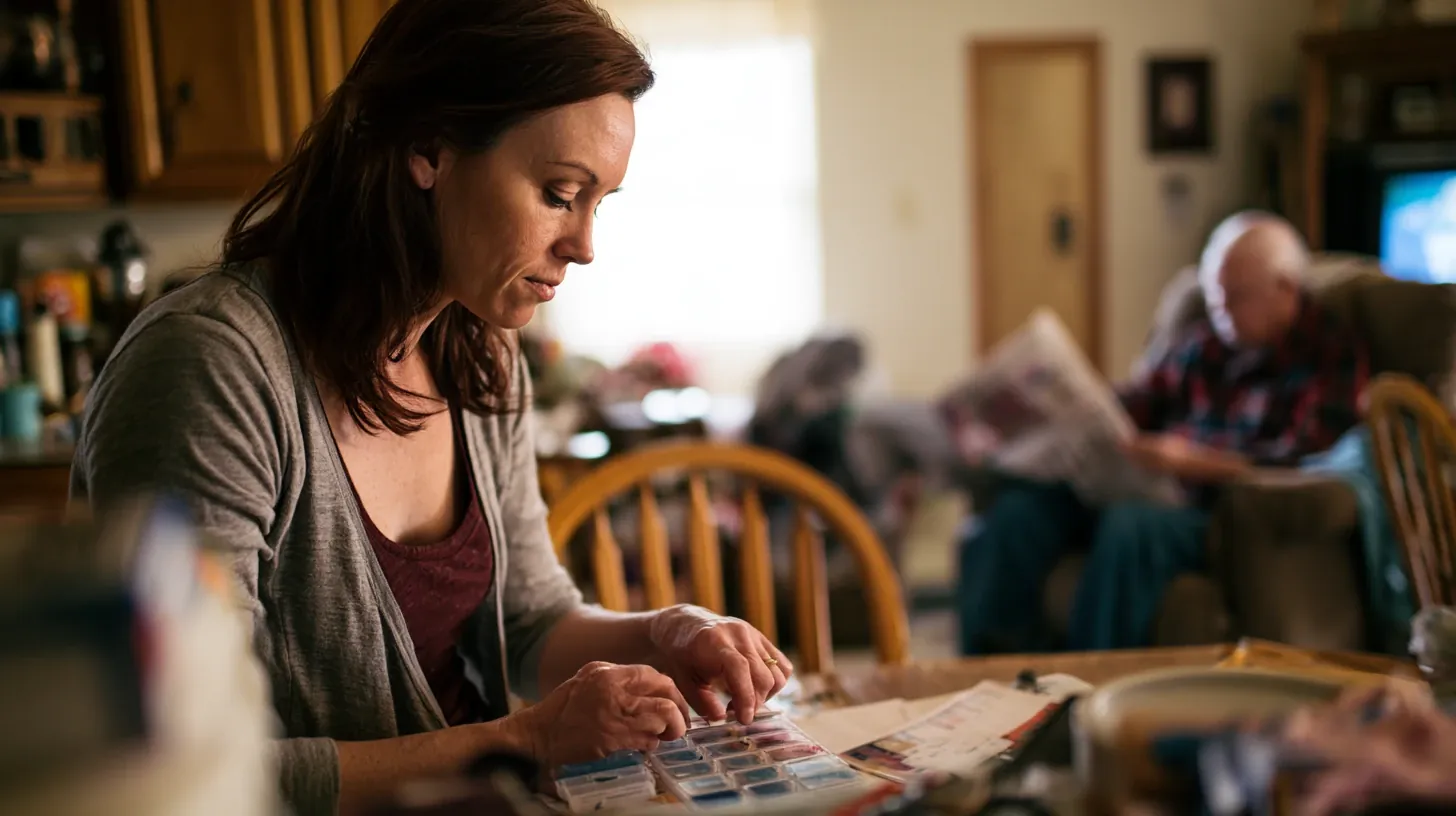
Sometimes a parent looks like they're doing fine at home mostly because someone else is quietly making that possible.
Who's doing the grocery shopping? Who fills the pill organizer every week? Who's coordinating the doctor's appointments? Who fixes things around the house when they break? Who calls every night just to check in? Who's taken time off work more than once this year for this? Who's carrying the worry, even when nothing's visibly gone wrong?
Growing caregiver effort doesn't automatically mean a parent needs to move. But it is real information about whether the current arrangement is sustainable — and it's easy to overlook, because the person doing all that invisible work usually just keeps doing it rather than naming it.
Sometimes what's needed isn't a different living situation.
It's simply more help, brought in on purpose instead of absorbed by whoever's closest.
Here's where many of these conversations go wrong from the very first sentence: they start with a list of everything Mom can no longer do.
Try starting somewhere else instead.
What does she most want to hold onto?
Her independence? The house? The dog? The neighborhood she's lived in for thirty years? Her privacy? Her church, her garden, her book club, being near her grandkids?
That question changes the whole shape of the conversation.
Instead of "here's what we're going to do with you," it becomes:
"How do we protect as much of the life you actually want as we possibly can?"
The second version isn't just kinder. It tends to get further, because it treats her as the person making the decision rather than the subject of one.
It's easy to assume the only options on the table are "everything stays exactly the same" or "move into senior living."
That's not actually the landscape.
There's real middle ground, and depending on what someone needs, it can include help with household chores, meal delivery, transportation, personal care assistance a few hours a week, home health services, safety modifications to the house, a medical-alert system, adult day programs, respite care for whoever's been carrying the load, regular check-ins from family or volunteers, or a geriatric care manager who can help sort out what's actually needed.
This isn't a services directory to memorize.
The point is simpler: recognizing that someone needs more support doesn't automatically answer where that support has to happen.
Sometimes the right move is adding help and staying put. Sometimes needs eventually outgrow what home can reasonably provide, no matter how much help gets added.
Both can be true.
Which one is right depends on the person, the needs and the moment.
And figuring out which one you're dealing with is exactly why the conversation needs to happen before the answer is forced on you.

Falls are a good example of how this works in practice, because families tend to treat them as either nothing or everything.
A fall deserves real attention — it can be serious, and it's not something to wave off.
But one fall doesn't automatically answer the housing question.
It might lead to a medical evaluation, physical therapy, a review of medications that could be contributing, grab bars or other changes around the house, a medical-alert system, more help at home, or a longer conversation about mobility in general.
Or it might turn out to be one piece of a larger pattern that's been building for a while and does eventually point toward a different living arrangement.
Don't minimize a fall.
Don't treat it as an automatic ticket to assisted living either.
It's information, not a verdict — same as almost everything else on this list.
Here's maybe the strongest practical reason to bring this up sooner rather than later: it gives your parent time to actually be part of the decision, instead of reacting to one that's already been mostly made.
Time to understand what she actually wants.
Time to learn what kinds of support even exist, because most families don't know the full range until they need it.
Time to understand what things cost.
Time to visit a few communities, if that ever becomes relevant, without the pressure of needing to decide by Friday.
Time to try more help at home and see whether it's enough.
Time, frankly, for more than one conversation, because almost nobody settles something this big in a single sitting.
And time, most importantly, for your parent to have a real voice while there are still several good options on the table — rather than having circumstances narrow those choices for them.
"Is it time for senior living?" is a heavy question, and it might eventually be the question your family has to answer.
But it doesn't have to be the first one.
The first question can simply be:
Is it time to start talking about what comes next?
That's a much smaller ask, and a much more useful one.
One question demands a decision.
The other creates options.
And when you're talking about something as personal as where and how someone will spend the next chapter of their life, having more options — and more of their own voice in choosing among them — is a far better place to start than waiting until circumstances make the decision for you.

Jeff Hix writes about senior living with one goal: helping families, providers, and healthcare professionals make better decisions through transparency, education, and practical guidance.
After helping his father build, launch, and market an Assisted Living and Memory Care community in Southern California, Jeff developed a unique perspective on both the emotional journey families experience and the day-to-day realities senior living providers face.
Today, as Co-Founder and Chief Revenue Officer of Map Of Care, he writes about the ideas, trends, and practical insights shaping the future of senior living.
Advertised senior living rates can be misleading. Here is how to break down base rates, care levels, and hidden fees to find the real monthly cost.

When an aging parent resists help, the key isn't persuasion—it's understanding what they fear losing. Here is how to navigate the conversation.